Diwali (Deepawali)—the cosmic Mahaparv of illumination, righteousness, and boundless abundance—will be celebrated across the globe on Sunday, 8 November 2026. Occurring on the dark new-moon night (Amavasya) of the holy month of Kartik, this sacred night commemorates the divine descent of Goddess Maha Lakshmi, the arrival of Lord Rama into illuminated Ayodhya after fourteen years of exile, and the emergence of cosmic wisdom overcoming the shadows of ignorance and debt.
Ancient texts, including the Skanda Purana and Padma Purana, affirm that worshiping Goddess Lakshmi alongside Lord Maha Ganapati (the remover of all obstacles), Lord Kuber (the custodian of planetary wealth), and Maa Saraswati (the deity of intellect) during the auspicious Pradosh Kaal and Sthira (Fixed) Lagna shields the home from misfortune and establishes permanent financial stability. This comprehensive guide covers exact 2026 muhurat windows, complete 16-step Shodashopachara vidhi, full samagri checklist, and online pilgrimage seva.
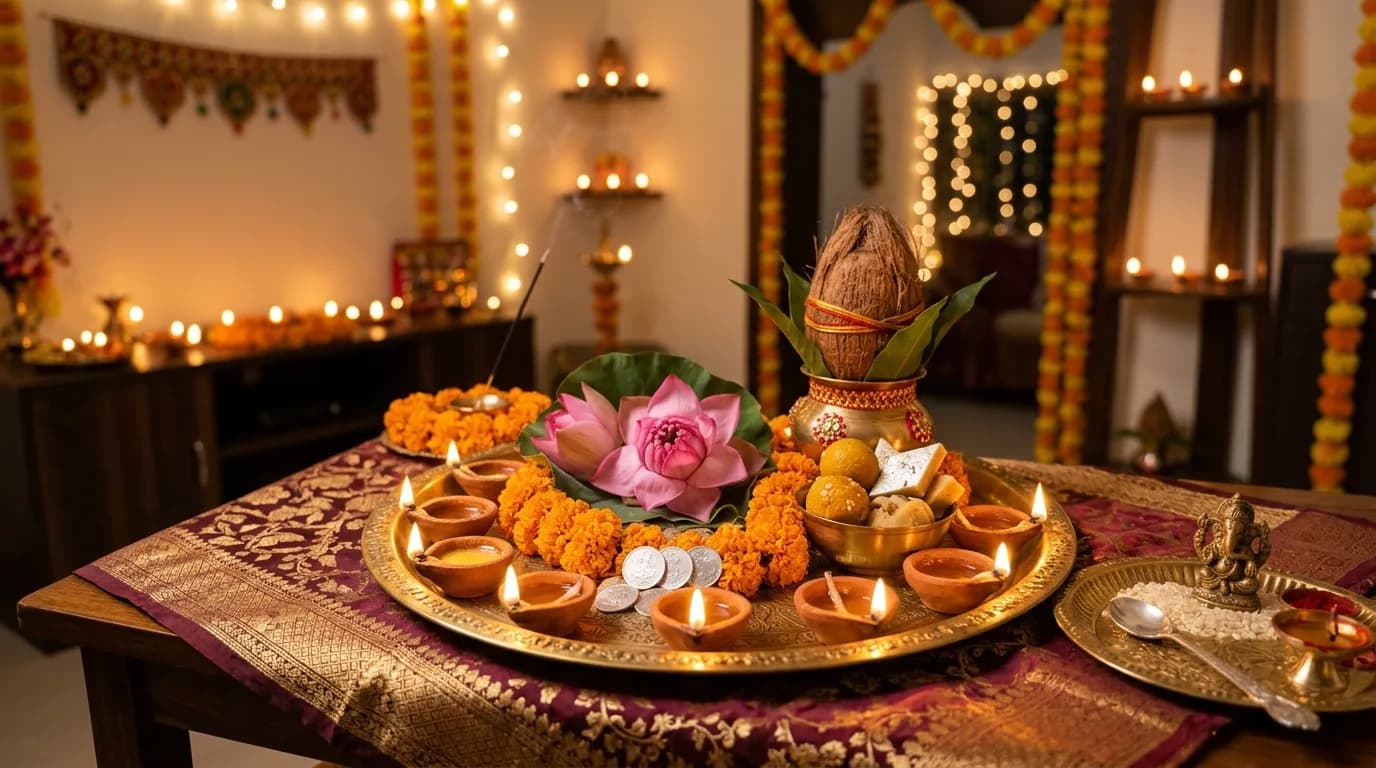
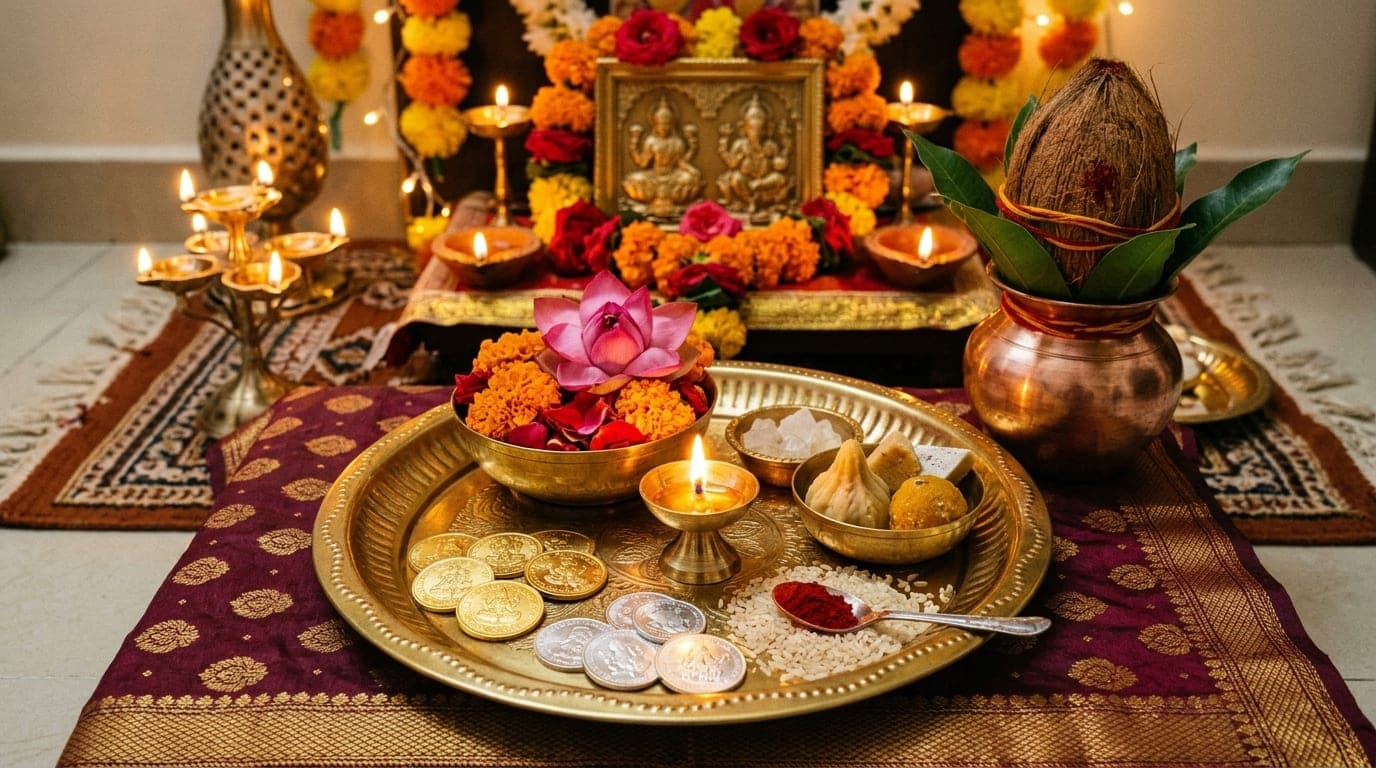
Traditional Diwali home altar featuring 108 glowing cow ghee deepaks, sacred coconut kalash, pure silver coins, fresh pink lotus, and sweet naivedya offerings.
Astrologically, worship conducted during Sthira Lagna prevents wealth from departing from the home, while Pradosh Kaal marks the exact twilight window when Goddess Lakshmi visits pure households. Below are the verified timings for Sunday, 8 November 2026:
Diwali 2026 Essential Lakshmi Puja Muhurats (8 November 2026)
Kartik Amavasya Tithi Begins04:12 PM (8 Nov 2026)
Recommended Devotional Purpose: Lighting initial evening threshold diyas, preparing the chowki and rangoli.
Kartik Amavasya Tithi Ends03:45 PM (9 Nov 2026)
Recommended Devotional Purpose: Amavasya concludes on Monday afternoon, transitioning into Govardhan Puja.
Primary Lakshmi Puja Muhurat (Prime)05:30 PM to 07:26 PM
Recommended Devotional Purpose: Coincides with Pradosh Kaal and Vrishabha Lagna. Most auspicious window for families and householders.
Vrishabha (Sthira) Lagna Window06:05 PM to 08:02 PM
Recommended Devotional Purpose: Best for shop owners, traders, corporate offices, and opening new Bahi-Khata ledgers.
Pradosh Kaal Window05:26 PM to 08:04 PM
Recommended Devotional Purpose: Ideal for lighting 108 oil and ghee lamps and chanting Sri Suktam with the family.
Mahanishita Kaal (Midnight Muhurat)11:38 PM to 12:31 AM (Night of 8 Nov)
Recommended Devotional Purpose: Esoteric midnight window for Tantric sadhana, Kali Pujan, and high-intensity mantra japa.
Shubh & Amrit Choghadiya (Evening)05:30 PM to 08:46 PM
Recommended Devotional Purpose: Favorable overall evening Choghadiya for Lakshmi Aarti, fireworks, and distributing sweets.
Authenticated Vedic Muhurats for Diwali Lakshmi Puja (8 November 2026)
Puja Window / Muhurat
Exact Time Window (IST)
Recommended Devotional Purpose
Kartik Amavasya Tithi Begins
04:12 PM (8 Nov 2026)
Lighting initial evening threshold diyas, preparing the chowki and rangoli.
Kartik Amavasya Tithi Ends
03:45 PM (9 Nov 2026)
Amavasya concludes on Monday afternoon, transitioning into Govardhan Puja.
Primary Lakshmi Puja Muhurat (Prime)
05:30 PM to 07:26 PM
Coincides with Pradosh Kaal and Vrishabha Lagna. Most auspicious window for families and householders.
Vrishabha (Sthira) Lagna Window
06:05 PM to 08:02 PM
Best for shop owners, traders, corporate offices, and opening new Bahi-Khata ledgers.
Pradosh Kaal Window
05:26 PM to 08:04 PM
Ideal for lighting 108 oil and ghee lamps and chanting Sri Suktam with the family.
Mahanishita Kaal (Midnight Muhurat)
11:38 PM to 12:31 AM (Night of 8 Nov)
Esoteric midnight window for Tantric sadhana, Kali Pujan, and high-intensity mantra japa.
Shubh & Amrit Choghadiya (Evening)
05:30 PM to 08:46 PM
Favorable overall evening Choghadiya for Lakshmi Aarti, fireworks, and distributing sweets.
The traditional Shodashopachara (16-step) worship is the highest standard of Vedic hospitality offered to the divine beings. Follow these steps during the Pradosh Kaal window:
Aachaman & Shuddhikaran: Sit on a clean woollen or kush aasan facing East or North. Take a drop of Ganga Jal in your right palm using the spoon, chant 'Om Keshavaya Namah, Om Madhavaya Namah, Om Narayanaya Namah', sip the water, and wash hands reciting 'Om Govindaya Namah'. Sprinkle Ganga Jal on your body and samagri.
Kalash Sthapana & Varuna Avahan: Fill the copper Kalash with pure water, drop a betel nut, silver coin, and pinch of turmeric inside. Place mango leaves in a circular formation, top with a coconut wrapped in red mauli, and place it to the left of Goddess Lakshmi.
Lord Ganesha Pujan (First Invocation): Invoke Lord Ganesha with red sindoor, unbroken akshat, and green durva grass. Pray: 'Vakratunda Mahakaya Suryakoti Samaprabha | Nirvighnam Kuru Me Deva Sarvakaryeshu Sarvada'.
Maha Lakshmi Avahan & Asana: Fold your hands and meditate on Devi Lakshmi seated upon a golden lotus with elephants showering ambrosia. Offer flowers and invite Her: 'Om Mahalakshmyai Cha Vidmahe Vishnupatnyai Cha Dheemahi | Tanno Lakshmih Prachodayat'.
Panchamrit Snana: Gently bathe the silver coins or idols with raw milk, curd, ghee, honey, and ganga jal sequentially, drying them with a clean cotton cloth before placing them on fresh lotus petals.
Vastra, Chandan & Kumkum: Offer a small red cloth or red sacred thread (mauli) to Goddess Lakshmi and yellow cloth to Lord Ganesha. Apply fragrant Ashtagandha, chandan, and kumkum tilak.
Lotus Flower & Bilva Patra: Offer the fresh pink lotus flower directly at Goddess Lakshmi's feet. Offer bilva leaves to both Lakshmi and Ganesha, as the bilva tree is believed to have sprouted from Lakshmi's penance.
Dhoop & Deep Darshan: Wave pure dhoop incense sticks to purify the atmosphere. Light the primary Akhanda Ghee Diya that will remain illuminated throughout Diwali night.
Naivedya & Kheel-Batashe Offering: Place the plate of fresh Kheel, Batashe, Motichoor Ladoo, and Panch Meva before the deities. Sprinkle three drops of water around the plate while chanting 'Om Amritopastaranamasi Swaha', offering the food with love.
Bahi-Khata & Tijori Pujan: Place financial ledgers, passbooks, business registers, or digital devices on the chowki. Mark them with red Swastika and write 'Shubha-Labha' using chandan.
Lighting 108 Diyas: Light the prepared clay diyas filled with mustard oil and place them at the main entrance, windows, balcony, terrace, tulsi plant, kitchen, and corners of the house.
Kapur Aarti & Pushpanjali: Sing the sacred 'Om Jai Lakshmi Mata' aarti accompanied by bells and conch. Conclude with folded hands offering flowers (Mantra Pushpanjali) and seeking forgiveness for any inadvertent errors.
Sacred Chants: Sri Suktam & Lakshmi Kuber Mantras
Chanting the Sri Suktam from the Rigveda is considered the most potent sadhana on Diwali night. If you cannot recite all 16 verses, chant the supreme Bija mantra with complete devotion:
Why Lakshmi Puja at Baba Baidyanath Jyotirlinga Holds Unique Power
Among all sacred pilgrimage centers in India, Baba Baidyanath Mandir in Deoghar holds a unique spiritual station. It is one of only two places on earth that is revered as both a Dwadasa Jyotirlinga (Kamana Linga) and an ancient 51 Shaktipeeth (Hardapeetha, where Mother Sati's heart fell).
According to ancient Tantric traditions, when Shiva (the primordial consciousness) and Shakti (cosmic prosperity and power) are invoked together on Diwali night at Baba Baidyanath, prayers for debt elimination, family harmony, and business expansion are answered with tremendous speed. The wish-fulfilling Kamana Linga transforms heartfelt sankalpas into lived reality.
Book Online Diwali Maha Lakshmi Puja at Baba Baidyanath with Video Proof
If you are residing abroad in the USA, UK, Canada, Australia, Singapore, or UAE—or if demanding work schedules prevent you from organizing an elaborate Vedic ceremony—you can now participate directly in this timeless festival.
VisitTemples organizes dedicated Diwali Maha Lakshmi & Kuber Pujan conducted by initiated Tirth Purohits at Baba Baidyanath Jyotirlinga. The Purohit recites your individual Family Names, Gotra, and Specific Desires aloud during the live Sankalp, conducts the full 16-step ceremony with 108 cow ghee deepaks, and sends an exclusive 2 to 3 minute high-definition video recording directly to your WhatsApp within 24 hours.
What is the exact Diwali 2026 Lakshmi Puja Muhurat time?+
In 2026, the prime Diwali Lakshmi Puja Muhurat is between 05:30 PM and 07:26 PM on Sunday, 8 November 2026. This period coincides with Pradosh Kaal and the auspicious Vrishabha (Sthira) Lagna, making it the most potent time for household and commercial prosperity.
Why is Vrishabha Lagna considered the best time for business owners?+
Vrishabha Lagna is a 'Sthira' (fixed) zodiac ascendant. Vedic scriptures state that any worship performed or enterprise initiated during Sthira Lagna ensures that Goddess Lakshmi stays permanently in your house or enterprise, preventing fluctuating or vanishing wealth.
How many diyas should be lit on Diwali night?+
Traditionally, a minimum of 13, 21, or 108 clay diyas are lit. One prime 'Akhanda Diya' filled with pure cow ghee is kept burning throughout the night in the puja room, while remaining diyas filled with mustard oil are placed at entrances, balconies, and rooftops.
Can unmarried people or individuals living alone perform Lakshmi Puja?+
Yes, absolutely. Goddess Lakshmi rewards genuine devotion and purity of intent. Any individual, whether single, student, or working professional, can light a pure ghee lamp, offer fresh flowers, and chant the Lakshmi mantra with a clean heart.
How does online Diwali puja booking work for NRIs in USA, UK, and Canada?+
Devotees living abroad submit their family members' names, gotra, and birth details via our website or WhatsApp. Our Tirth Purohits in India conduct the puja during the exact auspicious IST muhurat, taking your individual sankalp live on camera, and send the personalized video proof directly to your WhatsApp.
What should be done with the Kheel-Batashe and silver coins after Diwali?+
The silver coins should be respectfully kept in your wealth locker, cash drawer, or temple altar throughout the year. The Kheel-Batashe should be distributed among family and neighbors as sacred prasad, and any surplus can be shared with birds or nature.
Puja in your name
Cannot do the Diwali Lakshmi Puja yourself?
Our pandits perform pujas online and recite your family's full names and gotra in the live sankalp. You receive your personalized video proof on WhatsApp within 24 hours.