Falling on the Chaturdashi tithi of Kartik Krishna Paksha, Narak Chaturdashi—widely revered as Choti Diwali, Roop Chaudas, Kali Chaudas, and Bhoot Chaturdashi—will be celebrated across India on Saturday, 7 November 2026. This multifaceted day is steeped in profound Vedic lore, commemorating Lord Sri Krishna and His consort Satyabhama destroying the demonic tyrant Narakasura, rescuing 16,100 imprisoned women, and cleansing the world of negative entities.
Beyond myth, Narak Chaturdashi holds critical spiritual and energetic significance. Rituals performed on this day—namely Abhyanga Snan (pre-dawn sacred herbal bath), Yamadeepdaan (lamp offering to the Lord of Death), Hanuman Pujan, and lighting 14 traditional clay lamps—are designed to eradicate untimely demise (Akal Mrityu), eliminate chronic physical fatigue, and purify the subtle energy body before the descent of Maha Lakshmi on Diwali night.
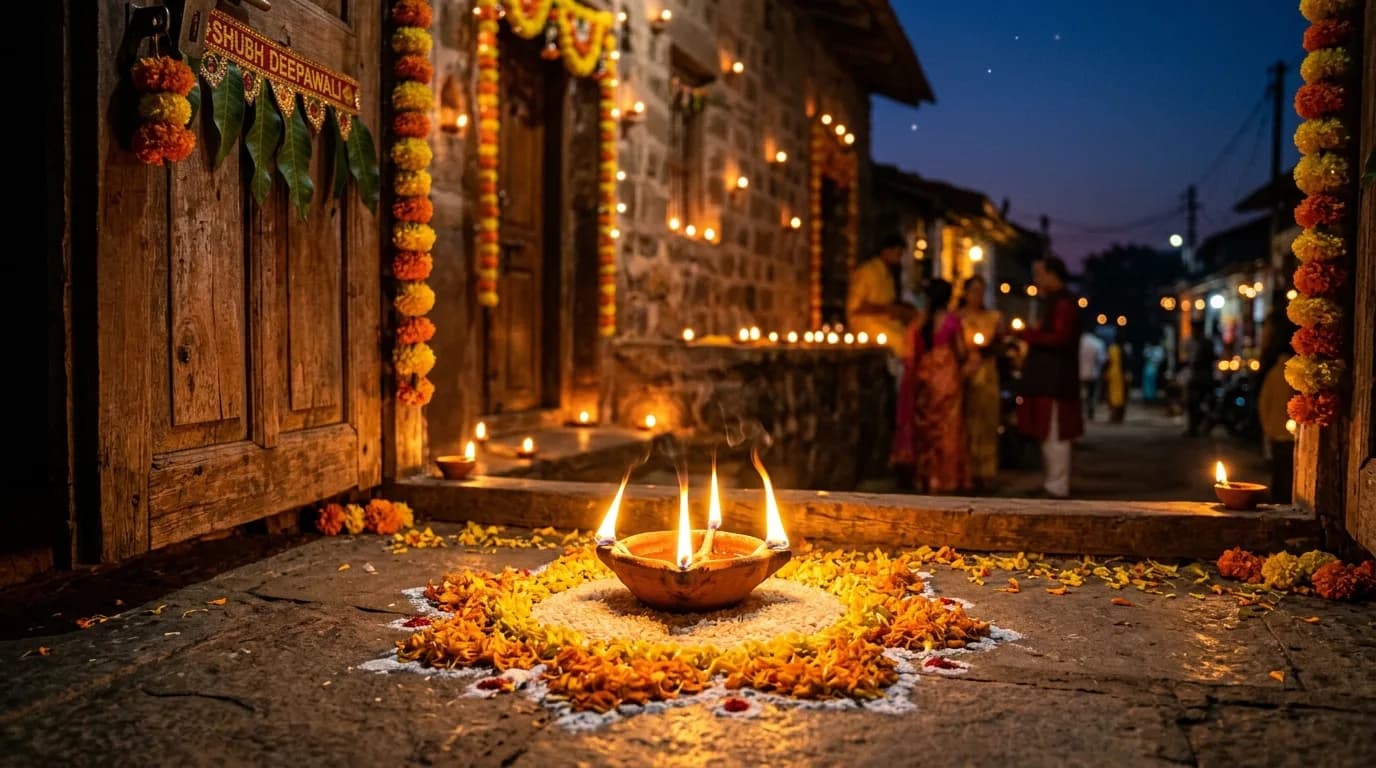
Sacred Yamadeepdaan on Choti Diwali: Four-wick earthen lamp lit on a bed of rice and marigold petals outside the southern threshold to prevent untimely afflictions.
Narak Chaturdashi 2026 Essential Muhurats Table
Panchang calculations for 2026 show that the Chaturdashi tithi spans Saturday afternoon into Sunday morning. Below are the authenticated Vedic time windows:
Narak Chaturdashi 2026 Shubh Muhurats (Saturday, 7 November 2026)
Chaturdashi Tithi Begins02:18 PM (7 Nov 2026)
Significance & Guidelines: Beginning of Choti Diwali festivities, Hanuman worship, and evening lighting preparation.
Chaturdashi Tithi Ends04:12 PM (8 Nov 2026)
Significance & Guidelines: Chaturdashi concludes on Sunday afternoon, followed immediately by Diwali Amavasya.
Abhyanga Snan Muhurat (Pre-Dawn Bath)05:08 AM to 06:36 AM (Morning of 8 Nov)
Significance & Guidelines: Moonrise before sunrise window for sacred herbal bath with sesame oil and ubtan.
Yamadeepdaan Evening Window05:32 PM to 06:50 PM (7 Nov 2026)
Significance & Guidelines: Lighting the prime 4-wick lamp outside facing South to ward off negative astral energies.
Lighting of 14 Clay Diyas05:30 PM to 08:30 PM (7 Nov 2026)
Significance & Guidelines: Placing 14 oil lamps in designated spots of the home according to ancient custom.
Kali Chaudas & Hanuman Pujan11:38 PM to 12:30 AM (Midnight)
Significance & Guidelines: Potent Tantric night window to neutralize negative eye (Nazar), fear, and Shani doshas.
Vedic Panchang timings for Narak Chaturdashi / Choti Diwali 2026
Auspicious Ritual / Event
Exact Time Window (IST)
Significance & Guidelines
Chaturdashi Tithi Begins
02:18 PM (7 Nov 2026)
Beginning of Choti Diwali festivities, Hanuman worship, and evening lighting preparation.
Chaturdashi Tithi Ends
04:12 PM (8 Nov 2026)
Chaturdashi concludes on Sunday afternoon, followed immediately by Diwali Amavasya.
Abhyanga Snan Muhurat (Pre-Dawn Bath)
05:08 AM to 06:36 AM (Morning of 8 Nov)
Moonrise before sunrise window for sacred herbal bath with sesame oil and ubtan.
Yamadeepdaan Evening Window
05:32 PM to 06:50 PM (7 Nov 2026)
Lighting the prime 4-wick lamp outside facing South to ward off negative astral energies.
Lighting of 14 Clay Diyas
05:30 PM to 08:30 PM (7 Nov 2026)
Placing 14 oil lamps in designated spots of the home according to ancient custom.
Kali Chaudas & Hanuman Pujan
11:38 PM to 12:30 AM (Midnight)
Potent Tantric night window to neutralize negative eye (Nazar), fear, and Shani doshas.
The Sacred Abhyanga Snan (Holy Sesame Oil Bath) Vidhi
Scriptures state: 'Taila Lakshmi Jale Ganga'—on the morning of Narak Chaturdashi, Goddess Maha Lakshmi resides in sesame oil (Til Tel) and holy Mother Ganga resides in all pure water. Performing the Abhyanga Snan before sunrise removes physical lethargy, cures skin impurities, and prevents one from entering agonizing hellish realms (Naraka Nivaranam):
Prepare the Herbal Ubtan: Blend chickpea flour (besan), sandalwood paste, turmeric, crushed rose petals, and pure mustard or sesame oil into a rich paste.
Sesame Oil Massage: Warm pure cold-pressed sesame oil. Massage thoroughly over your body from head to toe, allowing the oil to penetrate the pores and stimulate lymphatic detoxification for 15–20 minutes.
Apamarga (Chirchita) Plant Proti-Pradakshina: Before bathing, take a small sprig of the holy Apamarga (Prickly Chaff flower) plant with roots, swirl it three times clockwise over your head, and cast it away. This ancient Vedic practice casts off sins and subtle karmic toxins.
Bathing with Warm Water: Bathe using warm water infused with a few drops of Ganga Jal. Wash off the ubtan completely without harsh chemicals. Don fresh, bright-colored festive clothes.
The Rule of 14 Diyas: Where to Place Each Lamp on Choti Diwali
In Sanatan tradition, 14 small earthen lamps filled with mustard oil are lit on Choti Diwali night to dispel the 14 types of cosmic negativity and invite divine radiance. Place them as follows:
Placement Guide for the 14 Earthen Diyas on Choti Diwali
Diya 1Outside Main Entrance (South Facing)
Spiritual Invocation & Purpose: Prime Yamadeepdaan to Lord Yama for eradication of untimely accidents.
Diya 2Puja Room Altar (Devasthan)
Spiritual Invocation & Purpose: Honoring Kuldevata, Ishta Devata, and Lord Sri Krishna.
Spiritual Invocation & Purpose: Guiding positive celestial energies into the home.
Diya 12South-West Corner (Nirriti)
Spiritual Invocation & Purpose: Subduing negative planetary influences and Vastu doshas.
Diya 13Front Porch / Vehicle Parking
Spiritual Invocation & Purpose: Safety and protection during family travels and journeys.
Diya 14Garbage Disposal Area / Outside Drain
Spiritual Invocation & Purpose: Removing negative spirits (Alakshmi) from departing the home.
Traditional Shastric placements for the 14 Choti Diwali earthen diyas
Diya #
Prescribed Location in House
Spiritual Invocation & Purpose
Diya 1
Outside Main Entrance (South Facing)
Prime Yamadeepdaan to Lord Yama for eradication of untimely accidents.
Diya 2
Puja Room Altar (Devasthan)
Honoring Kuldevata, Ishta Devata, and Lord Sri Krishna.
Diya 3
Sacred Tulsi Plant (Vrindavan)
Invoking Goddess Vrinda and seeking domestic harmony.
Diya 4
Kitchen near Drinking Water Vessel
Varuna and Pitru Devata blessings for pure nourishment.
Diya 5
Treasury / Cash Safe (Tijori)
Invoking Lord Kuber for sustained financial protection.
Diya 6
Main House Center (Brahmasthan)
Harmonizing the five cosmic elements in the living space.
Diya 7
Rooftop / Terrace Center
Surya Devata and Akash Tattva illumination.
Diya 8
Granary / Food Storage Area
Goddess Annapurna blessing for continuous food abundance.
Diya 9
Study Room / Bookshelf
Maa Saraswati invocation for academic and intellectual growth.
Diya 10
Main Bedroom Doorstep
Removing mental anxiety and ensuring peaceful sleep.
Diya 11
Balcony or Window sill
Guiding positive celestial energies into the home.
Diya 12
South-West Corner (Nirriti)
Subduing negative planetary influences and Vastu doshas.
Diya 13
Front Porch / Vehicle Parking
Safety and protection during family travels and journeys.
Diya 14
Garbage Disposal Area / Outside Drain
Removing negative spirits (Alakshmi) from departing the home.
Hanuman Pujan & Kali Chaudas: Conquering Fear & Evil Influences
In many parts of India, especially Gujarat, Maharashtra, and North India, Choti Diwali is celebrated as Kali Chaudas. It is traditionally regarded as the night when Lord Hanuman revealed His supreme protective might to shield Mother Sita and the universe from demonic forces.
Because 7 November 2026 falls on a Saturday (Shaniwar), conducting Hanuman Pujan on this night yields dual spiritual benefits: it neutralizes severe Saturn (Shani Sade Sati) obstacles and completely eradicates fears of ghosts, witchcraft, and psychological torment. Offer orange sindoor mixed with jasmine oil (chameli tel), a garland of betel leaves (paan ke patte), and recite the Hanuman Chalisa eleven times.
Online Puja Seva: Hanuman & Shani Shanti at Sacred Jyotirlingas
Devotees facing complex planetary periods, chronic family illnesses, or residing far from ancestral temples can participate in our dedicated Choti Diwali Shani-Hanuman Mahapuja conducted live at Baba Baidyanath Dham (Deoghar) and Ujjain.
Our verified Vedic purohits chant your individual Name and Gotra live on camera, offer sacred mustard oil deepaks and bilva patra, and send the personalized 2–3 minute video proof directly to your WhatsApp within 24 hours.
What is the exact Abhyanga Snan timing for Narak Chaturdashi 2026?+
In 2026, the sacred Abhyanga Snan window is between 05:08 AM and 06:36 AM on the morning of Sunday, 8 November 2026 (prior to sunrise). Performing this herbal oil bath during moonrise dispels physical fatigue and brings radiant spiritual health.
Why are 14 diyas lit on Choti Diwali?+
The 14 earthen lamps honor the 14 Yamas (celestial aspects of cosmic justice and death) and illuminate the 14 realms of existence, ensuring that departed ancestors are pleased and that living family members are shielded from premature demise.
What is the Apamarga plant and why is it used during the bath?+
Apamarga (Prickly Chaff flower / Chirchita) is a sacred Ayurvedic herb. Swirling it three times over the head before bathing on Narak Chaturdashi is prescribed in the Dharma Sindhu to banish bad dreams, sins, and subtle psychological ailments.
Can we do Yamadeepdaan on both Dhanteras and Choti Diwali?+
Yes. Traditional Shastras recommend performing Yamadeepdaan from Trayodashi (Dhanteras) through to Bhaidooj. Lighting the south-facing lamp on both evenings provides uninterrupted spiritual protection to the household.
Why is Hanuman Puja performed on Choti Diwali?+
Lord Hanuman is the supreme dispeller of fear and malevolent planetary forces. Performing His worship on Choti Diwali (especially when it falls on a Saturday) eliminates Rahu, Ketu, and Shani doshas, bringing immense courage and peace of mind.
Puja in your name
Cannot do the Diwali Lakshmi Puja yourself?
Our pandits perform pujas online and recite your family's full names and gotra in the live sankalp. You receive your personalized video proof on WhatsApp within 24 hours.